



Not for the first time, some of the most exciting dance music around is coming out of Baltimore.
Reenergised by a younger generation putting a fresh spin on the Baltimore Club sound, the East Coast city is producing stacks of great records – and we keep hearing dazzled on-the-ground reports from our cool DJ friends (yes, we have them!) about the shows they’ve played there.
In many ways, Baltimore still feels like the underdog of stateside dance music: less storied than Detroit, Chicago and New York, despite its rich history of house music and its crucial role in the genealogy of club styles from Jersey and Philadelphia. So hearing about a thriving new era in Baltimore was always going to be catnip to us.
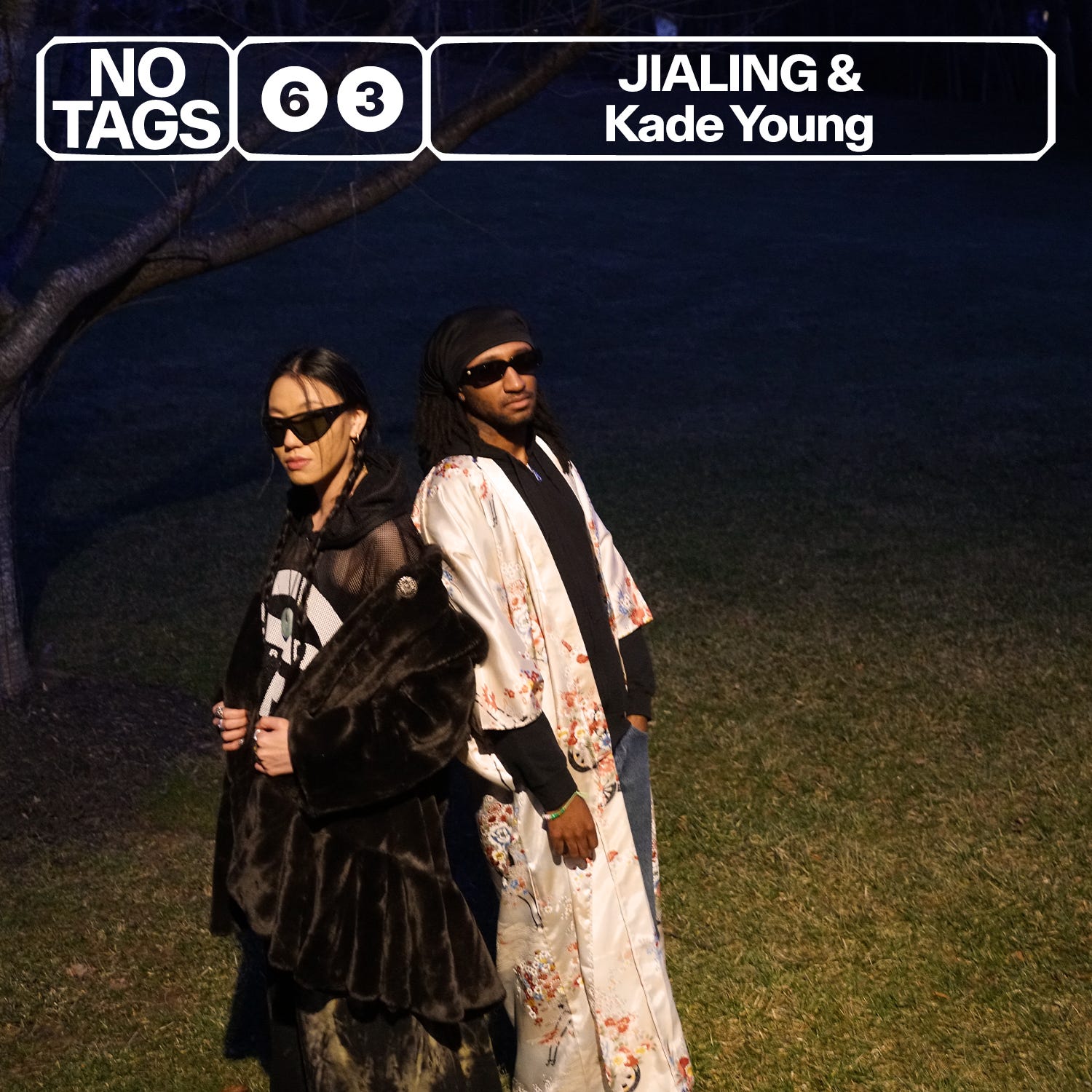
Kade Young and JIALING are two central figures in the city’s new school, known for running events and releasing a stream of club bangers via their label WOE. They had plenty to tell us about why Baltimore is the real engine room of US dance music right now, and why the city’s importance remains undersung. As well as clueing us into the local scene in 2026, they also provided an insider perspective on the last 20 years of Baltimore Club.
There’s also a neat intergenerational link here: Kade’s pops is DJ Spen, house music legend and a member of the Basement Boys, the Baltimore hit factory that gave us ‘Gypsy Woman’. More catnip for dot-connecting nerds!
We also managed to record the entire episode without making a joke about The Wire, so well done us. (Come at JIALING, you best not miss...)
Before that, in this show’s intro, we offer our recent scene reports: Tom’s trip to see Tony Njoku’s All Our Knives are Always Sharp at the Southbank Centre, and Chal mucking in at the SMUT Press night at the Distillery.
We also tackle the elephant in the big room: Fred Again and Thomas Bangalter’s back-to-back at Alexandra Palace. Was this an event for the ages? Should the man behind ‘Club Soda’ be lowering himself to making mash-ups with someone with eight hyperlinked family members on Wikipedia? Or are they both in fact nepo baby posh men? Find out inside!
In other news: we’ll be at Devon Ojas’ listening room at 180 The Strand next week to play vinyl with Call Super and Parris. Both slots sold out before we could actually tell you about it, but we have other sessions coming this year which will be announced in a more timely fashion.
And, a quick plug for Chal’s next club night: Get A Grip returns on Good Friday at cool new venue Distillery N17, with sets from Olof Dreijer – yep, that one – and Miss Cabbage, repping Glasgow queer collective Ponyboy. Should be good! Tickets here.
You know the drill: we do this podcast for the love, and we do it around day jobs. We have no sponsorships, no backing and we don’t even run ads, so if you want to show some love back, do consider subscribing to our paid tier. A subscription gives you a discount on our books, plus mate’s rates tickets when we put on live shows.
Tracks played on this episode of No Tags:
JIALING – ‘FREAKY HORNS’ (29:20)
Kade Young – ‘Heatseeker’ (29:36)
JIALING & Kade Young feat. Calvo & SDOT – ‘DUMMY’ (29:50)
Diamond K – ‘Put Ya Leg Up’ (1:26:26)
DJ Technics – ‘Girlfriend’ (1:27:05)
Calvo – ‘6AM Encounter’ (1:28:01)
SDOT feat. Amen the Producer – ‘Raw’ (1:29:07)
TL: First off, could you introduce yourselves?
JIALING: Hey, I’m J. Some people know me as Big J, or JIALING. I was born and raised in Baltimore in the ‘90s and was a classically trained cellist. I had met Kade briefly in school, but we never talked until years later. I went on a little expedition with classical music which didn’t really work for me, then I did some visual arts and ended up in nightlife, producing and DJing. When I moved back to the US in 2020, I was back in Baltimore with my parents, reconnected with Kade and that was kind of the birth of Big J, when I moved back and started to develop my own sound alongside the homies like Kade and Calvo. At that time it was right after the pandemic, so it was really natural just to talk about what our musical goals were and what we were trying to do, and then meeting more of the scene, including the dancers and organisers. Then I moved back to New York and was there for a few years, but I’m now between New York and Baltimore.
Kade Young: I’m Kade, born and raised in Baltimore. I’ve been doing music in some capacity for a long time. I started out playing guitar for a little bit, I was in a couple of different bands. I probably started producing around 18 or 19. I went away to school, to a liberal arts college in Ohio, which was awful.
CR: That’s what Hannah does in Girls. She goes to Oberlin and lasts a semester and then comes back home. [Correction! Hannah goes to the Iowa Writers’ Workshop for one semester – but her character originally graduated from Oberlin. Apologies, Girls nerds!]
KY: I went to Oberlin! I like the school for what it was. Obviously there’s a lot of great music there, they have the conservatory and a lot of cool, eclectic music production courses. I enjoyed that and I enjoyed meeting people there, but in terms of where it is and how it’s situated, it’s kind of boring. There’s a ceiling to the fun you can have there, but it was a good place to cut my teeth DJing and producing.
In 2017 I came back to Baltimore, finding my way in the scene a little bit, doing little free parties or open decks, bar gigs for a while. Then the pandemic happened. In 2021 I was a co-founder of a group called Midnight Club, which started doing regular monthly parties at this club called The Crown in Baltimore. That really put me and some other people on the map here – there weren’t really a lot of parties happening at that time, because the lockdown had just started to get lifted.
TL: Did you have seated parties over there? That was a thing in the UK for a while, where you could throw a party, but everyone had to stay seated.
KY: No, I don’t envy that at all. No seated parties, although there were a lot of parties capped at 50 or 100, which was kind of nice in a way because it kept it intimate. You’d see the same people, we had a lot of regulars. Like J said, we started talking again – we’d gone to high school together for a couple years, but we never really talked. I saw J post a techno track on Facebook and we became friends after that.
TL: I’m sure most No Tags listeners have some idea about Baltimore Club and what it sounds like, but I think in a lot of cases that’s going to be records from 20 years ago now, and probably filtered through non-Baltimore DJs as well. It’d be good to hear your definition of Baltimore Club, in your own words.
KY: There are a few key components. Originally it was a blend of hip-hop vocals and dance beats. In the late ‘80s it was a bit more house-y, but the building blocks of a typical Baltimore Club song are either a ‘Think’ break or a ‘Sing Sing’ break, that five-beat kick pattern, and probably some chopped up or sampled vocals, usually around 130-135 BPM. That’s the standard template, but it can vary pretty wide.
J: Breaks are a pretty fundamental part of that Baltimore sound – they’re the building blocks. Baltimore artists now maybe won’t use as many breaks, but back in the day when it was turntables and stuff, they were still sampling funk or disco breaks from the crates, finding the breaks that they liked. What stuck with us now are those breaks like the ‘Think’ or the ‘Sing Sing’, but there are a bunch of [other] breaks in there that Baltimore Club artists were chopping up, sometimes even live. It’s also a big MC culture.
KY: An MC, not necessarily a rapper. You’re throwing these parties and someone’s holding it down.
TL: Do those building blocks still apply to what people are making in the city now?
KY: In some ways, yeah. We’ve now gone full circle where we’re going a bit back in time, using more breaks, whereas the 2010s were a period where Baltimore really wasn’t known for breaks at all. It was a lot of vocal chops, really fast and bassy. But there’s so many people producing here right now, there’s a lot of blends of different influences from other regions. There’s still that core sound, but it varies a lot now.
J: The only other thing I would add is, maybe after the 2010s, there was more collaboration between our East Coast cousins in Philly, New Jersey and New York. There’s cross-influence that has become this East Coast club sound – though West Coast artists are really honing in too.
TL: We do want to talk about the multi-generational aspect to what’s going on in Baltimore, so it’d be great if you could talk a little bit about DJ Spen, Kade.
KY: For those who don’t know, DJ Spen is my pops. He’s a really foundational soulful house and garage artist from Baltimore. He’s part of the Basement Boys, which is the seminal group and label of Baltimore house music – they’ve put out a million classic records in the past 20 years.
When you’re a kid, anything your parents do is going to be kind of lame, so I didn’t really care much for what he was doing until my teenage years. When I was a kid I would come with him to the studio. It’s wild seeing people playing these records out now, because I was there when they were being recorded, just sitting in the studio or in the other room playing PlayStation or whatever. When I was 17 or 18, I actually got to go to London and do a short internship while I was there. Over there, y’all can go clubbing when you’re 18, but I’d never actually been able to really see him play in a nightclub setting. He happened to come over while I was doing this internship and he played the Southport Weekender. I’d never really seen him play, but it was a night and day, Superman and Clark Kent kind of vibe. This guy I see sleeping in the house and mowing the lawn and stuff is suddenly this superstar in this other country. People were lining up to meet him. It really, really blew my mind. That was a big part of me wanting to be a DJ. I was still more in a hip-hop phase then, I was more focused on making beats than dance tracks, but it gave me some ideas that I hadn’t really been thinking about before.
TL: Would someone from his generation ever call themselves a Baltimore Club DJ, or would he just say that he’s a house DJ?
KY: It’s funny you say that, because I have these kinds of conversations with him. I’ll show him what I’m calling a club track and he’s like, oh, that’s just house music. He kind of references everything as just being house music, and I think that’s really how it was at that time, during the early ‘90s, late ‘80s. No one was calling it Baltimore Club until it spread elsewhere and we had to distinguish it.
CR: Is there anything that makes Baltimore Club distinct in terms of the DJing style, or the parties? Especially when you’re comparing to regional styles that are quite similar, like Philly Club or Jersey Club?
KY: It’s a bit more blended together now so perhaps there’s a little bit less distinction, but in terms of the sonics and what’s going into a song, we’re typically more break-heavy. We’re a bit more aggressive. Jersey being our cousins, we share a similarity in that we’re really focused on the dancers. I love New York, I love these other places, but I really haven’t been anywhere else where people are just battling and dancing the whole time. There’s a lot more crowd interaction, it feels more community driven. There’s a lot more call and response, we might stop a record and get on the mic for a little bit. It’s more of a party atmosphere, not necessarily like serious DJ dance music.
J: DJ-wise it’s common to hear the transition. You don’t always have to make it seamless. It’s more about keeping the energy high rather than the technical side. There’s a lot of very technical DJs, but I don’t think the focal point of the party is how well the DJs are blending, but more how they’re making the night. The technology that Baltimore Club DJs were using back then was a lot of Serato and laptop controller DJing, so that also invited some scratching, maybe some fast crossfader transitions and spinbacks.
TL: There’s also the dance aspect, right? That’s something that obviously gets talked about a lot with Chicago footwork, and maybe to a lesser extent Jersey Club, but I feel like a lot of people engaging with Baltimore from a UK or European perspective don’t know about the dance culture.
KY: Originally, in the ‘90s and early 2000s, Baltimore Club was still a pretty clear cousin of house music, sitting around 130 BPM. Once you get to the 2010s, things had picked up a lot more to 140, 150, really fast tracks. At this point, club music had already left Baltimore, gone to Jersey and Philly and come back around, so we had started to pull from their influences a little bit. It was a lot faster, a lot choppier.
It had also gone underground in the 2010s, with a lot of smaller parties focused on the dancers. The 2010 style is mostly what we call ‘shake off’ – which is pretty distinct from a lot of other club music sounds. Historically there has been a sort of schism within Baltimore Club, with the more shake off, 140bpm tracks versus the more traditional, break-heavy, 130bpm tracks. To the average listener, hearing a shake off track for the first time is probably overwhelming. There’s a lot going on: gunshots, bangs and horns, Lil Jon ‘what?!’ samples chopped up, but it’s really built for the dancers and their footwork. All those little chops and sound effects you’re hearing, that’s for someone to specifically move their feet to. It is interesting you bring up Chicago footwork because it is very similar in that vibe. It’s a very literal, footwork-heavy kind of style. In the 2010s things started to move more away from general party and radio music and was more focused on the dancer scene. The scene started to coalesce around that a bit more.
There’s still a lot of dancers here, but I think we’re in a good place now where it’s the best of both. We have a lot of us making stuff that’s a bit easier for the layman party-goer to enjoy, but we’re still keeping the battle dancers in mind.
CR: Do either of you dance?
Both: Not well!
J: Calvo’s really good.
KY: Calvo can dance, yeah. Growing up, you hear all this stuff on the radio and everyone at recess can do a few moves, just because you have to know a couple of moves. But being around so many serious dancers, I will never say I’m a dancer. You know what I mean?
CR: When I hear about the history of almost all American dance music, but especially the East Coast regional club styles, this idea of high school parties always comes up, and the sense that the focus point of the scene is 15-year-olds, basically! Are high school parties still a focus of Baltimore club music?
KY: As far as I know, it’s not so much the case now. I feel removed from the really young scene, although I will occasionally go to some dance cyphers and stuff to hang out. You’ll see a few younger people there still, but in the past six, seven, eight years, hip-hop has captured more of the younger audience mindset. So it’s probably not as influential, there’s less opportunity for bigger high school parties. But all through the 2010s and even earlier in the 2000s, it was really focused on high school and college kids.
J: Now it’s a lot of TikToks and online stuff where people are using dance productions and making dance moves, having that go viral and spreading dance music that way. A lot of these songs right now are popping off because of people doing dances on TikTok – there’s a whole ecosystem of club dancers here who are militant about TikTok. They’re putting out a few every week, doing different dances to different songs and pushing them out. I guess that’s kind of where it’s at.
CR: Are they making a deal with a producer to use their track, and then that’s part of your promo for the track? Is it as formalised as that?
J: I think it’s more organic. They’re just homies and they like the track.
KY: It’s hard to say. There’s this guy RunItUp Jordan who’s associated with Unruly Records – they’re a historically big Baltimore club label here. He has a record deal [as a rapper], but he can also dance too. He’ll do dance videos and get sponsorships from [convenience store chain] Royal Farms and all this crazy stuff. In some ways, the dancers are doing better than some of the DJs, because they’ll get featured to do brand partnerships and stuff in Baltimore. They work with our football team the Ravens. It’s kind of wild, honestly.
TL: What’s the landscape like in the city, in terms of event spaces and clubs?
KY: I think we’re in one of the best eras we’ve had in a long time. I really like to think about Baltimore Club as being in different eras. The ‘90s was the golden age, the 2000s as well in a way. The 2010s went a bit more underground, it was more battle cyphers. Now a lot of us have been able to leave town, come back and take some things we’ve learned back with us. There are a few popping clubs in the city, there’s a lot of DIY stuff as well – we’ll do big warehouse parties and stuff.
We’re such a small town that different scenes have to work together. Club music is a very specific thing here, but we also rub shoulders with techno and house music people. You’ll have a bill where there’s a techno artist, then someone who’s doing more bass music and a club person, but it makes sense because we’re all around each other, we know how we play – it’s really natural. We don’t have a ton of higher scale, high production clubs, but we have a few that do the job. Parties are usually around anywhere from 100 to 300 people, unless it’s a warehouse thing which could be bigger. I’d say we’re two steps above DIY right now.
J: We got our staples too, like Royal Blue which is always going to be open and is also free. That’s where a lot of people go before going out, because it closes at 2AM. It’s definitely a DJ hub, it also has food and is right down the street from 1722, which is a bigger club that Kade and I do events at. Then you get some warehouses a little bit further away, but everything in Baltimore is like 10-15 minutes apart, so you’ll usually see the same faces between events.
CR: Okay, so for the dance music tourists, it’s Royal Blue followed by 1722. That’s your night out in Baltimore.
KY: Yeah, and The Compound for more of a warehouse night. We’re a city that closes at 2AM typically, sometimes 1.30AM, so there are a lot of places like 1722 which are more after-hours spots. They’ll open at 11, but go till four or five and just stop serving alcohol.
CR: Is there a state curfew at 2AM? Like an alcohol curfew?
KY: A city one, I believe. It’s a pretty hard cut-off, which makes things tough for a dance scene. We have to have some warehouse spots or more DIY stuff just to keep it going.
CR: Tom and I often talk about the idea of what makes the perfect night out, so as veteran party enjoyers, tell us what you think makes for a perfect party.
J: If the party’s more focused on the people on the dancefloor than the DJ, I would say that’s a good party.
KY: I appreciate a crowd with an open mind and Baltimore is very much that. I love Baltimore because you can go into a rave and see punks, trappers, queer kids, club dancers and techno heads. They’re all just coexisting and having a lot of fun with each other. I think those moments where it brings people from a lot of disparate places and scenes together is always really fun to watch and kind of ideal. But if no one’s dancing, I don’t want to be there. At the end of the day, we’re throwing a party.
TL: Is there still a big punk and hardcore scene in Baltimore?
KY: Especially in the warehouses. Our two main exports of music right now are Baltimore Club and hardcore. I’m not super deep in that scene, but I’ll go to some shows every now and then and they’re really cool. They’ll come to our events and we’ll go to theirs, the city is so small and close-knit that you’re gonna rub shoulders with everybody. Hardcore is really big in Baltimore. Turnstile, which is our big band that came out of here, just won a Grammy.
TL: It’s funny, I listened to them for the first time last year and halfway through one of the records there was a club kick pattern. I was like, ‘Okay, they’re from Baltimore, I get it now.’
Something we talk about on No Tags quite a lot is this idea of the network, these collections of people in different countries, in different cities, that operate with a shared set of values. Over time, especially in underground music, you make those connections and can create a larger whole.
J, if you look at where you release your music, that’s the perfect example. There’s WOE in Baltimore, Sorry Records in New York, TREKKIE TRAX in Tokyo, Clasico in London. Does that idea of the network ring true in terms of what you’re doing in Baltimore?
J: When I’m coming back to Baltimore, I always feel like I’m going home. Even when I go out for a quick night at Royal Blue, I’ll see familiar faces and it’ll feel like home. At the same time, I do feel that way visiting you guys in London, and the same in Tokyo. It’s finding people who you rock with. The more I DJ and travel, the more I feel like I’ve developed this sense of going home to different communities through music, which is really special. I’m really grateful for that. New York’s really big, it’s just a big city with a lot going on, so it always feels good to come back to Baltimore.
KY: We’re definitely very close-knit here. There are probably more DJs in Baltimore than there’s been forever and we’re all friends. We also like each other, so it’s not hard for us to work together because we actually are all fans of each other’s music. In terms of a broader scene, I feel like historically there’s been a lot of competition between cities – a lot of that hip-hop crew kind of mentality. But right now it feels like we’ve finally achieved like, East Coast club music peace.
Everyone’s really cool with each other, we can go to Jersey or Philly, or they can come here, and it’s all love and everyone knows each other. It’s such a niche and specific thing that we’re doing, and making that I think you just have to gravitate towards other people whose music you enjoy or are a fan of. I feel like me and J, or any one of us in Baltimore, could go somewhere else and our names would be good and we’d be comfortable and safe there. It’s club music, we’re all kind of cousins at this point.
CR: What kind of interactions are there between the older generation of Baltimore Club artists and the younger ones?
KY: That’s a deep question. For a lot of the 2010s club producers, there were some chips on their shoulders where it felt like there wasn’t much of a torch passed down to the younger generation. It felt like there was this sudden cut from the golden age club music to the stuff that ended up being more battle music. All the younger people were like, ‘they’re not gonna help us and they’re not gonna show us the way, forget it, we’re gonna do this our own way’.
I’d say now, though, there’s been this massive resurgence in club music and there’s been a lot more opportunities. Now a lot of us are in positions to throw our own parties and put money in [the older generation’s] pockets. It’s come back around to where there is collaboration in a way that feels nice. It feels cool. In terms of production and working on music, not so much. A lot of the older generation are in their 40s and 50s, they have day jobs, or they got other stuff to do. They’re chilling.
A lot of them are back DJing though. I’ve seen Technics play a few times in the past couple of years. Just this weekend Rod Lee was playing with Amen the Producer. We had a party last year called Club Kings, which was crazy – it was Rod Lee, Technics, Blaqstarr, some other folks. A lot of older folks are just chilling now though, like [KW] Griff, who I grew up around because him and my pops were really close friends. He does not come outside. You’re not going to hear from this man at all.
CR: Is any of that distance because the older artists felt a little bit of professional jealousy? Were they worried about having their spots taken?
KY: I mean, there might have been an inkling of that feeling. I talked to my pops about this a little bit. There was a big division between the house music folks and the club music ones. Spen, Karizma, Thommy Davis, Teddy Douglas, all those folks, they figured out how to play in Japan or Ibiza, they were able to figure out a bit more of the industry side in a way that I think some of the older club guys weren’t. [The club DJs] were super successful regionally, but there was a disconnect in getting out of Baltimore to get more money in their pockets.
I think there might have been a little bit of frustration with seeing where it could go and not quite getting there in some ways. As I’m saying this, I hope no one takes it the wrong way. Someone like Rod Lee, who’s made some of the best club records ever – I think ‘Dance My Pain Away’ is the best club song ever, hands down – is someone who’s done so much and grinded so hard, so I can see why it would feel easy [for him] to write off the younger generation.
Also, the music was so different. It had gotten so fast and was much more battle-focused that I imagine they didn’t even recognize it as being the club music that they created. It’s just growing pains, I think, but it does feel a lot more copacetic right now.
CR: We were wondering where Baltimore Club fits in the broader pantheon of American dance music history, and whether there’s a sense in the city that Baltimore has been unfairly minimised in that history.
KY: We’re such a bizarre city musically. We’re very much a hip-hop and rap city, with very few rap artists to come out of here. When we think of the dance music industry, we’re viewed more in that lens, even though we’ve had a lot of really respectable and great songs and artists come out of Baltimore.
CR: Who is the biggest rapper from Baltimore?
KY: I would say Lor Scoota, who had this song called ‘Bird Flu’. He passed a few years ago, which is a part of it as well, some people get their time cut short. Tate Kobang is pretty dope. There’s a lot of factors. Obviously, we get a bad rap for being a tough town or whatever.
CR: There’s loads of tough towns that get their place in the American dance music history books! Detroit.
KY: Chicago too! It’s always been easy for people to pick on Baltimore a little bit. We’re a very small market.
J: We’re small. We’re a small city.
KY: We’ve been in the shadow of DC a little bit too. We’re between DC and Philly geographically, which is kind of a tough place to be in. The money hasn’t always been there to put on these big shows, we haven’t always had the infrastructure to bring in big touring acts, so that’s made it difficult as well. There’s a milieu of different factors that have made it hard for people to see us as a city in that light in the dance music industry.
J: It’s a good point with Detroit. Why? I really don’t know. I think at this point, with the internet, it’s way easier for people to discover Baltimore Club and for it to penetrate the mainstream a bit more. Not that I necessarily hope that it makes it to the mainstream, but I do want for more people to know about it.
KY: I do think right now it feels like the ball is in our court a little bit because there’s been this massive sea change, where suddenly people are so into club music everywhere. And I think in a way it’s almost worked to this present scene’s favour that Baltimore has been overlooked for so long, because we’ve become this mysterious, lost city of Atlantis in dance music. People just don’t know what’s going on at all here. You talk to DJs from other cities and their influences are classic Baltimore Club records – which blew my mind, because I thought there was no way these songs were making it out of here.
People now are just so interested in Baltimore because it’s been mysterious to the wider scene for so long, so it does feel like we can bring people here now and people are excited to play. They won’t play for a whole lot of money, because the best parties are here, which helps as well. We’re in a place now where we can bring our friends from other places here to play, we’re welcome in other places and it feels like we have a bit more power in the industry.
TL: Pick us an all-time great Baltimore club tune. Actually, in the spirit of the show, maybe pick one old and one recent.
J: Diamond K, ‘Put Your Leg Up’ is a classic. I would have to say that.
KY: I mentioned earlier that ‘Dance My Pain Away’ is probably the best ever. That feels a little too easy, so I would probably say DJ Technics’ edit of ‘Girlfriend’, which I really like a lot.
TL: One of my favourite songs ever made!
KY: It’s so good, it’s the perfect closing track. In terms of new people, probably something by Calvo. We just put out an album from Calvo a few months ago on WOE.
TL: Which samples No Tags!
KY: Yeah! Friends of the show. He has a song on there called ‘6AM Encounter’ which is like this eight minute epic. It’s crazy.
J: It’s house-y, too – house-y, percussive, feel good. Also SDOT’s ‘Raw’. I can’t help picking things from our label! He made that with Amen the Producer – that’s a homie from the Bronx in New York. It’s just so much easier to collaborate now, there’s so many collabs from different artists in different countries or cities.
KY: Anything from SDOT or Calvo, honestly, I think they’re my twin GOATs. Also my good friends.
J: They’ve been consistently putting out music for 10-plus years.
TL: Our final question is always the same: recommend a film to us and our listeners.
KY: I just recently had a day where I watched a bunch of dance music or clubbing-adjacent movies. I watched Millennium Mambo, which is good. It’s less of a plot-driven film and more like an exercise in really good cinematography. It’s about this woman who’s living in Taipei, reflecting on her life 10 years ago where she was sort of caught between two boyfriends. One is a boyfriend, one is a cool gangster guy who has his life together, and the other is her loser DJ boyfriend – though he has pretty good taste in techno, actually. She’s just trying to get her life together and find her place in the world. It’s a very tense movie, but also very quiet. It’s a really good-looking film.
CR: Does it have loads of techno in it?
KY: Not really, it comes in and out. There are these scenes where her boyfriend’s mixing, or they’re at a club and there’s techno in the background. Then there’s scenes with no music, just them talking or ambient sound. It’s a really weird film. I feel like you’ve got to be in the headspace for it because it’s kind of heavy, but it’s really beautiful.
J: My favourite would have to be Trainspotting. I watched it again recently on a train from Scotland to London. Where I was seated, the guy in front of me was coughing and going through withdrawals, it was really horrible. I was like oh my god, he looks like the guy from Trainspotting, so that inspired me to watch it again.
CR: Have you seen T2, the sequel?
J: No, I actually haven’t. Should I watch it?
CR: I think if you love the original, you would love seeing the characters again.
KY: I feel like it’s fan service, you know? It’s nice to see how they’ve grown – or not grown.
CR: Definitely better than it needed to be, I would say. I’m really pleased to put Trainspotting on the official No Tags film list though. That pleases me.


